The 6 best AI tools for financial advisors in 2026

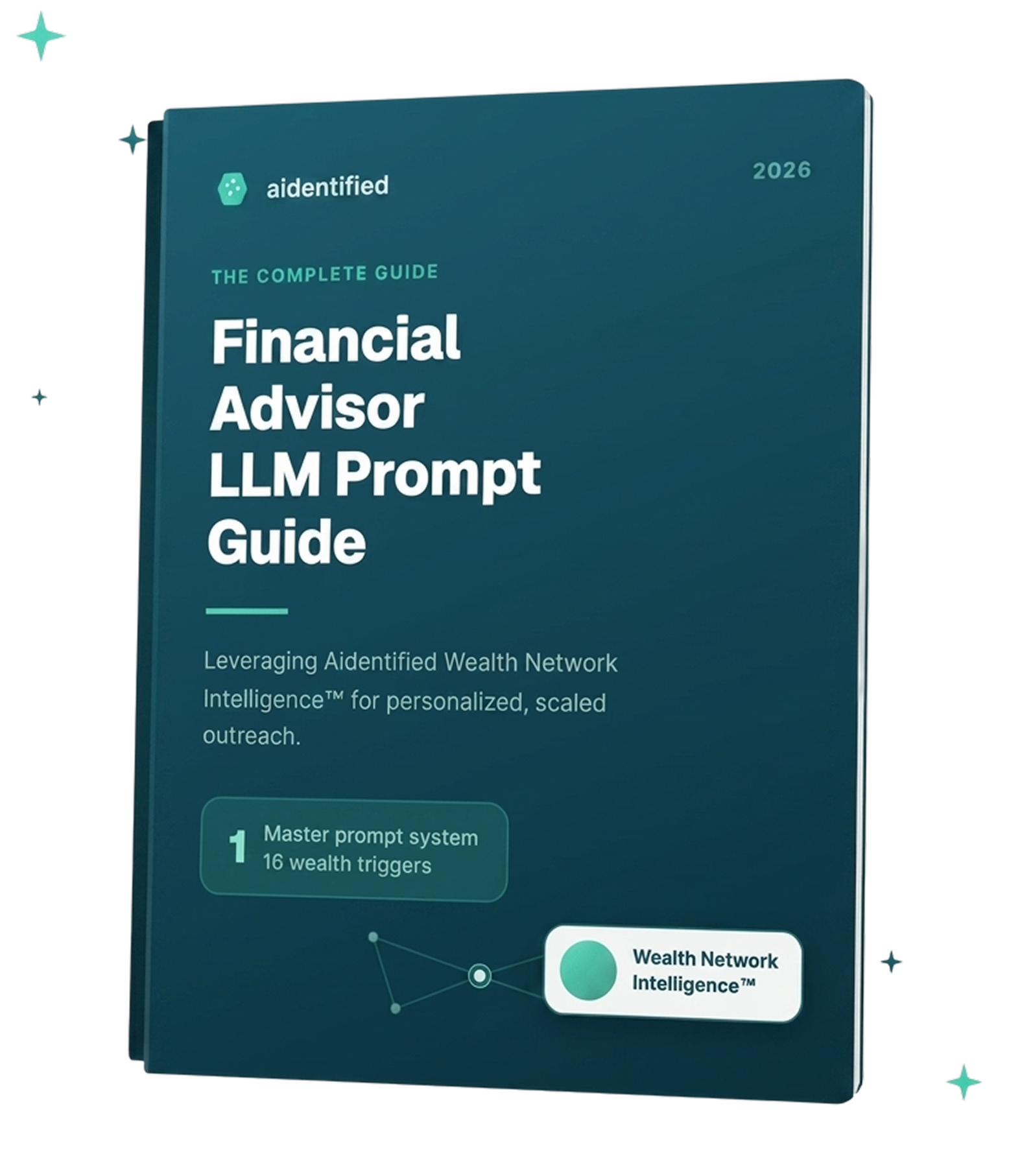
Download the LLM 2026 Prompting Guide
Teach your AI to think like your firm with 10+ customizable prompts
Download TodayTL;DR
Most AI tools for financial advisors handle admin work: meeting notes, email drafts, and scheduling. They save time but do not bring in new clients.
Aidentified ranks first because it is the only tool on this list built to find and qualify new prospects, monitor wealth events, and map warm introduction paths.
The best setup pairs one admin tool with one growth tool, so the time you save goes toward the right prospects.
AI is no longer a future consideration for financial advisors. It is already reshaping how prospects search for guidance, how practices create content, and how advisors find and qualify new clients.
This guide ranks the 6 best AI tools for financial advisors by category, from prospecting to planning. Understanding what an AI tool for financial advisors does day to day is the right starting point, particularly where an AI wealth management tool works differently than a general assistant.
AI tools for financial advisors in this guide
This article covers 6 categories of AI tools for financial advisors, ranked from Aidentified down to the narrower tools around it:
- Aidentified
- AI note takers for financial advisors
- AI CRM and workflow tools
- General-purpose AI assistants
- AI search and content tools
- AI tools for financial planning
Download the 2026 LLM Prompting Guide
{{lead-magnet}}
Best AI tools for financial advisors by category
1. Aidentified
Best for: financial advisors and RIAs who want AI that finds and qualifies new prospects, flags wealth events, and maps warm introductions.
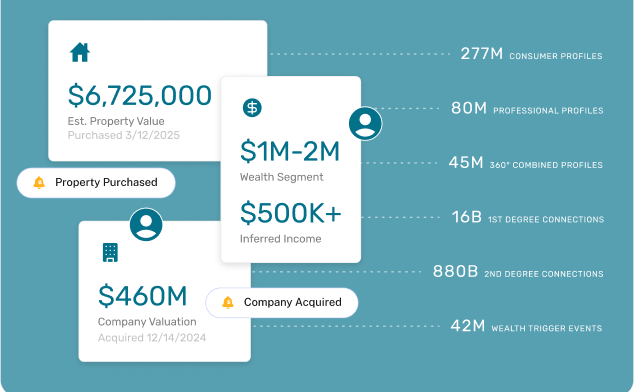
Aidentified is built specifically to qualify prospects, run wealth event monitoring, and map relationship paths to warm introductions, on a data foundation general-purpose AI does not have: household records, property transactions, equity filings, and relationship graphs. This is the approach behind ai lead generation for financial advisors.
That data layer is what makes outreach feel specific instead of interchangeable. A general AI assistant cannot know that a specific prospect just sold a business or vested equity. See why ai for wealth management tools built on general AI fall short, and how wealth management prospecting tools compare on data depth.
2. AI note takers for financial advisors
Best for: saving time on meeting prep, notes, and follow-up emails.
AI note takers transcribe client meetings, draft summaries and action items, and write follow-up emails. They are usually the easiest place for a practice new to AI to start, and they cut the admin that follows every call.
Where they fall short for wealth management
Note takers capture conversations you are already having. They do not tell you who to talk to next, flag when a prospect's situation changes, or find a warm introduction. They free up your time, but they do not point it anywhere.
3. AI CRM and workflow tools
Best for: keeping client records, tasks, and follow-ups current with less manual entry.
AI-powered CRMs and workflow tools draft emails, update records, and automate calendar tasks inside the system your team already uses. For an advisor with an active pipeline, that means less data entry and more consistent follow-up.
Where they fall short for wealth management
A CRM organizes the contacts you already have. AI inside it can summarize and automate, but it cannot surface qualified prospects you have not met. For intelligence that sits on top of a CRM, see sales intelligence tools for financial advisors.
{{banner}}
4. General-purpose AI assistants
Best for: drafting, summarizing, and quick research across the practice.
General-purpose assistants and AI search engines draft client emails, summarize long documents, and answer research questions in seconds. They are flexible and cheap to try, which makes them a common first tool.
Where they fall short for wealth management
These tools work from public text, not household wealth data or relationship graphs. They can polish a message, but they cannot tell you which prospect to send it to or when. Anything they draft also needs human and compliance review before it goes out.
5. AI search and content tools
Best for: staying visible when prospects ask AI answer engines for an advisor.
Tools that draft marketing content and structure it for AI-powered search and answer engines: FAQ pages and social content built around the direct questions prospects ask, plus schema markup that helps AI tools recognize that structure. See financial advisor marketing tools for the full category.
Where they fall short for wealth management
Visibility compounds slowly. These tools build awareness and inbound interest, but they do not identify the households worth pursuing or the moment to reach out.
6. AI tools for financial planning
Best for: scenario modeling, portfolio commentary, and plan drafts for existing clients.
Tools that assist with scenario modeling, portfolio commentary, and plan generation, supporting the advisory conversation itself once a prospect becomes a client.
Where they fall short for wealth management
Planning AI supports the clients you already have. It does not help you find new ones, which is why most practices adopt it last and pair it with a prospecting tool.
Six tools, but who do you call first? Aidentified ranks your prospects by wealth and timing, so your time goes to the right conversations.
How to choose AI tools for financial advisors
The starting point is not picking a single tool. It is identifying which category addresses the biggest bottleneck in your practice.
Step 1: Identify your highest-value use case
If administrative work is consuming your time, workflow AI is the right entry point. If pipeline growth is the bottleneck, prospecting intelligence is where the leverage is.
Step 2: Start with prospect qualification, not volume
If prospecting is the priority, qualify by household wealth data rather than job title first. This is the foundation every other step builds on, and where financial advisor research tools add the most value early.
Step 3: Connect it to your CRM
Make sure the contact and profile data AI surfaces flows into the CRM you already use rather than a separate dashboard. The best platforms integrate natively so enriched data becomes part of the existing workflow. Look for lead enrichment software that syncs contact and profile data into records, so you never reconcile two systems.
Turn any AI into an Aidentified outreach assistant
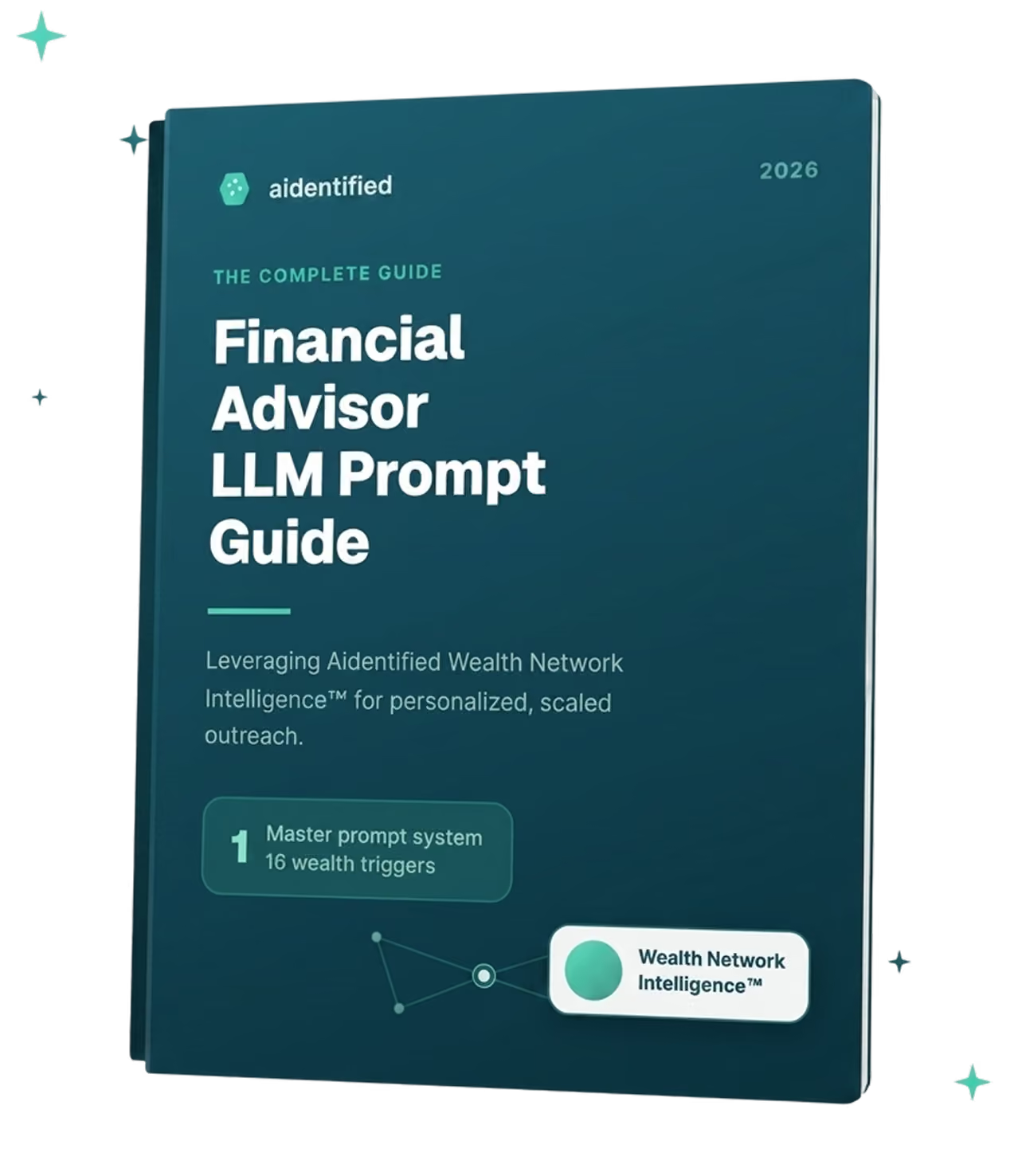
If you want to put the prospecting steps above into practice immediately, the LLM Prompting Guide turns any LLM, Claude, ChatGPT, or similar, into a compliance-aware outreach assistant for your firm. No coding or API access required.
Put AI to work on prospecting with Aidentified
Most AI tools for financial advisors save time on admin. The harder problem is knowing which prospects deserve that time and when to reach them. Aidentified answers both with household data and relationship paths, not general text.
Ready to see it on your own market? Try Aidentified for free.
FAQ: Do you have any questions?



growth engine with the
LLM Prompting Guide.
Reveal the power of your network with Aidentified’s industry-leading AI.
Discover how Aidentified can transform your specialty services business. Contact us today for a personalized consultation and demo.
Explore a demo