Prospecting high-net-worth clients with data that finds the warm path

This is a div block with a Webflow interaction that will be triggered when the heading is in the view.
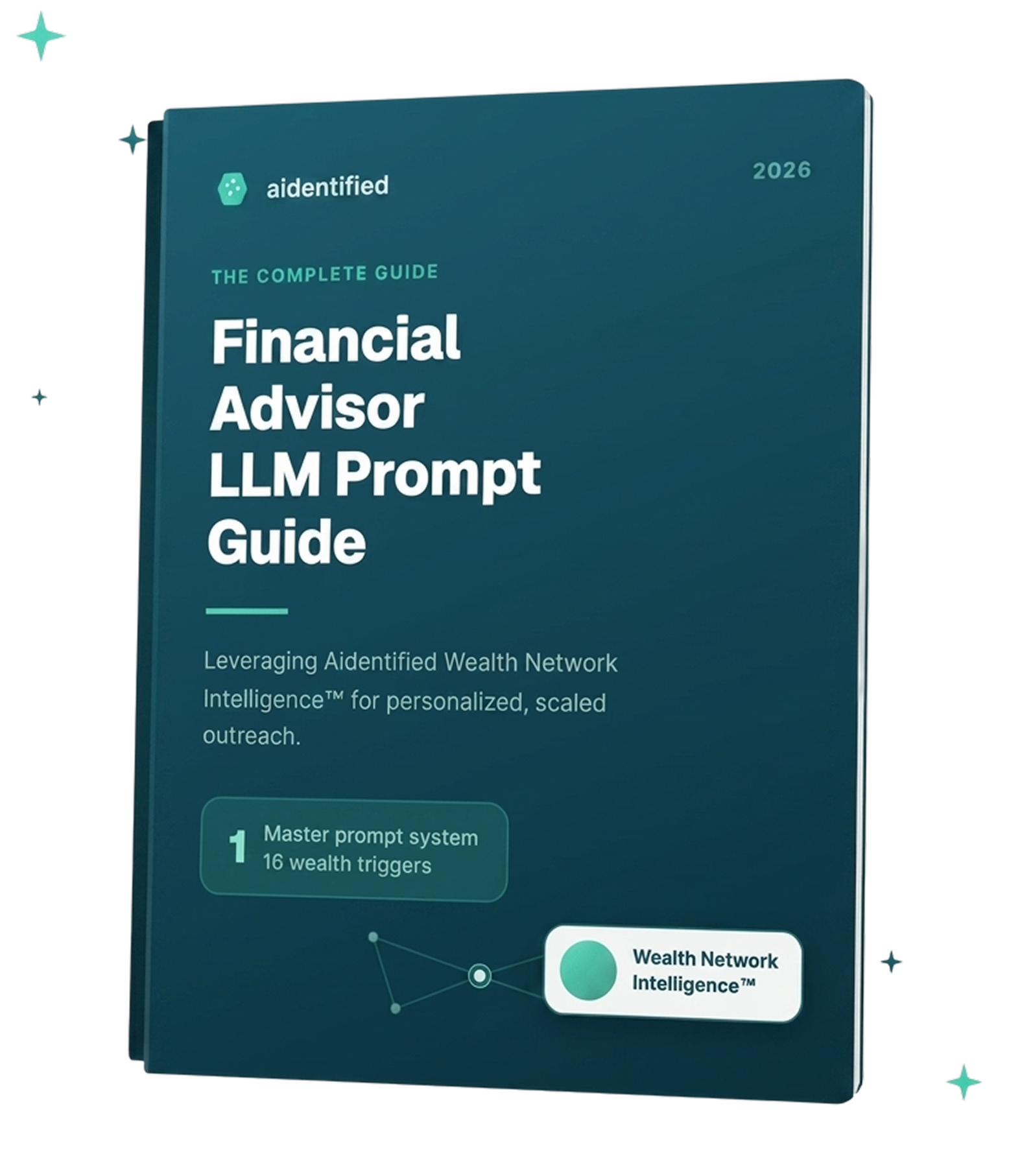
Download the LLM 2026 Prompting Guide
Teach your AI to think like your firm with 10+ customizable prompts
Download TodayTL;DR
Most high-net-worth prospects already work with an advisor, so the opening is a well-timed introduction from someone they trust.
The segment is defined by investable assets, and the tier a prospect sits in changes who you talk to and what you lead with.
Four rings shape the decision: the spouse, the existing advisors, the board and alumni network, and the family office gatekeeper.
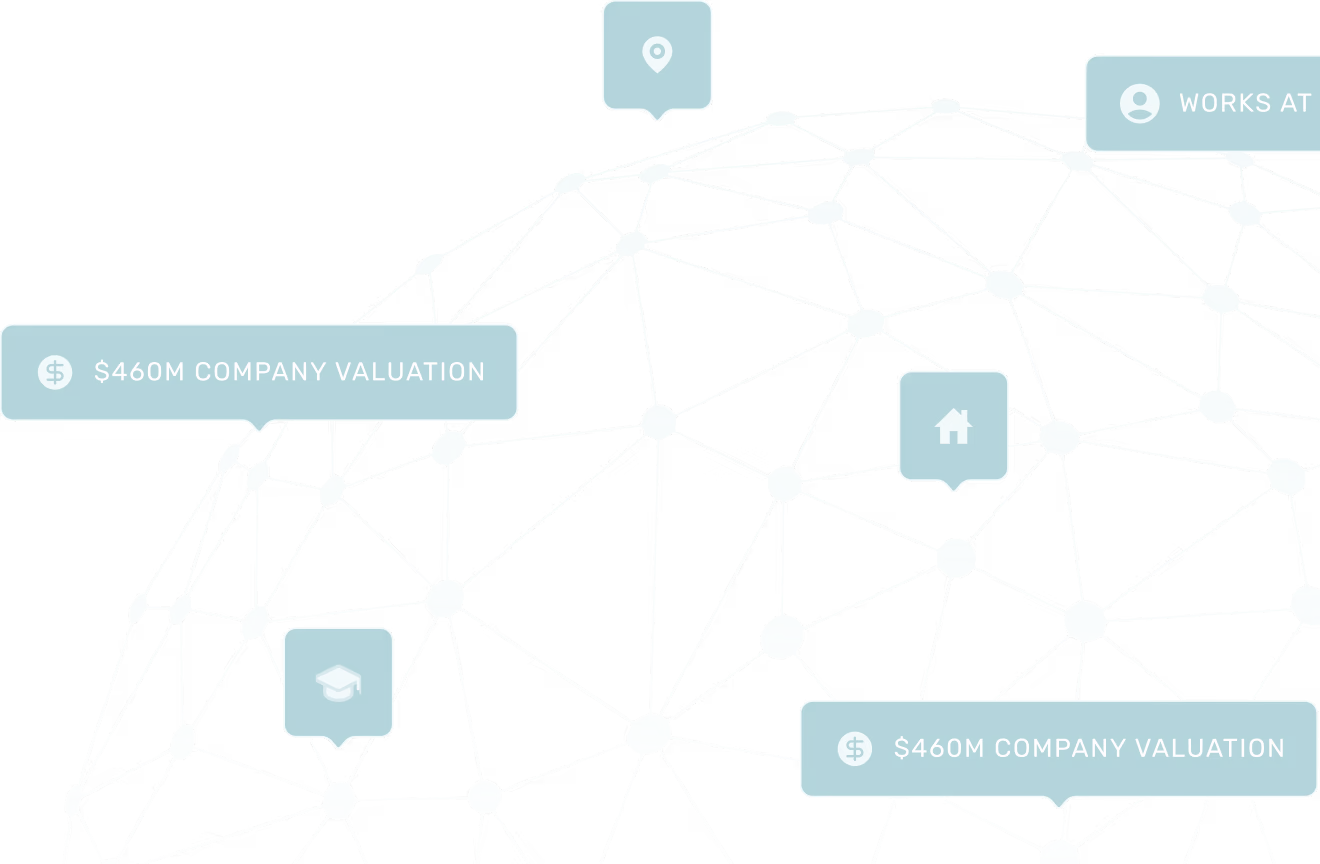
Aidentified maps that ecosystem and flags the wealth events that open a review window, across a full prospect list at once.
Around 74% of millionaires already work with a financial advisor, versus 34% of the general population, according to Northwestern Mutual's 2025 Planning & Progress Study. For financial advisors, that number reframes the job. The work is finding the moment a current arrangement comes up for review, and the person who can introduce you inside it.
Prospecting high net worth clients rewards the research you do before the first message. Wealth event monitoring tells you when a household's financial picture has changed, and relationship mapping tells you who can vouch for you. This guide covers the decision ecosystem behind every HNW prospect and how to map it.
Defining high net worth clients by investable assets
High net worth clients are defined by investable assets. Income and headline net worth both overstate what a household can put to work. Most of the industry uses $1 million or more in investable assets as the entry point, with a very high net worth band above $5 million and ultra-high-net-worth individuals starting around $30 million.
The tier changes the approach. A household with $2 million in investable assets is often the first real wealth management relationship, while a household with $40 million already has a team. Mass affluent prospects respond to lead generation and digital channels. HNW individuals respond to specificity.
Investable assets exclude the primary residence, which is why real estate holdings and private equity stakes read differently than a bank balance. A business owner with modest liquid assets and a company about to sell belongs on your high-net-worth prospects list well before the wire clears.
Why prospecting high net worth clients works differently
The prospecting strategies that work with mass affluent clients, digital leads, broad referral requests and event follow-ups aren’t as effective as you move up the wealth spectrum. Generic outreach gets filtered faster here, because prospects recognize it.
HNW clients are also buying a wider service set. Estate planning, tax coordination, business succession, charitable giving and portfolio management sit alongside investment management in what they expect, and many wealth management firms cover the gaps through outsourcing or strategic partnerships. Your value proposition has to name a specific gap in what they already have.
High net worth individuals are most likely to reconsider their advisory relationships after a major wealth event: a business sale, a significant inheritance, an executive transition. Knowing when that moment has arrived matters as much as knowing who to reach.
The four rings of the UHNW decision ecosystem
Every UHNW prospect sits inside a small group whose opinion carries weight, which is why efforts to attract ultra-high-net-worth clients run through that group.. Four rings show up consistently.
The spouse or domestic partner
In most UHNW households, major financial decisions involve both partners even when one is the primary wealth holder. The other partner's priorities, risk tolerance and existing relationships shape the outcome, invisibly when you have only researched the primary contact.
A partner who already has a wealth manager creates a different dynamic than one who never engaged an advisor. Household data that surfaces the partner's professional background and any separate wealth events gives you the real decision unit before the first conversation.
The existing advisory relationships
Most UHNW prospects have at least one existing advisor, often more. Investment management, tax, legal and estate planning functions often sit in separate relationships. Knowing where the gaps sit tells you whether you are positioning as an addition or a replacement.
Outreach that ignores this context arrives with a pitch for services the prospect already has. Knowing that a current advisor lacks depth in business succession, or that tax and investment relationships are fragmented, creates a precise entry point. This is where financial advisor prospecting ideas built on relationship context pay off.
Board peers and the professional network
Board affiliations, industry associations and alumni networks tell you who the prospect respects and who in your network might know them. Cross-referencing that history against your client and COI network surfaces connections neither party knows they share.
The referral sources for financial advisors that run through shared professional history are the ones worth working first.
The family office and gatekeeper structure
At the upper end, some prospects operate inside a formalized structure: a family office, an advisory council, or a small group of trusted professionals who vet any new advisory relationship before it reaches the principal.
Cold outreach to the principal rarely registers when this structure exists. The entry point is the gatekeeper whose endorsement makes a conversation with the principal possible. Knowing the structure exists changes the approach and the target.
Mapping the ecosystem before you reach out
Turn the four rings into a repeatable routine. Map them for a specific prospect before the first conversation.
Step 1: Build the household picture
Start with the household: who the partner is, their professional background, and whether they hold independent wealth. You are looking for any household member whose network creates a secondary warm path. Professional networks give partial coverage, and household data fills in the rest.
Step 2: Map the professional network
Cross-reference the prospect's board seats, alumni affiliations and employer history against your own client list and COI network. You want the nodes where your world and theirs intersect.
Then look for a first or second degree connection with a trusted relationship who could make a real introduction. Wealth screening tools designed for advisor prospecting make this cross-referencing faster than manual research allows.
Step 3: Find the warm introduction path
Once the ecosystem is mapped, pick the strongest path: the person whose relationship with the prospect is closest and most recent. When no strong path exists, the map still tells you which COI relationship to cultivate first.
Warm introductions carry weight here because they transfer trust a cold approach has to earn from zero. Using the ecosystem map to build referral lists turns a directory into a pipeline.
Step 4: Time outreach to wealth events
A well-mapped ecosystem produces better results when the timing aligns with a wealth event. A business sale, a board departure or a liquidity event are moments when financial complexity has shifted and advisory relationships come under review.
The map tells you which path to take, the wealth event tells you when. See how wealth management prospecting tools change once timing data is layered in.
Attracting high net worth clients after the first meeting
Organic growth runs in two directions: the HNW clients you win and the book you already hold. Attracting high net worth clients is the front half of lead generation for financial advisors, and holding their next generation is where AUM compounds or walks.
Family dynamics decide more of that than performance does. Adult children who never met their parents' advisor tend to move the assets when the inheritance lands, so family governance conversations and small-group webinars count as retention and client acquisition at once. A client's children are the next set of HNW prospects in your pipeline.
The same logic applies to your centers of influence. CPAs, estate attorneys and business valuators send referrals to the advisor they read as a thought leader in their niche, so publishing for that narrow audience beats broad marketing. COIs compound the way clients do.
Scale UHNW prospecting across your list with Aidentified
Piecing together household structure, network overlaps, board affiliations and warm path availability for one prospect takes hours. Running that research across a real prospect list is where most practices stall.
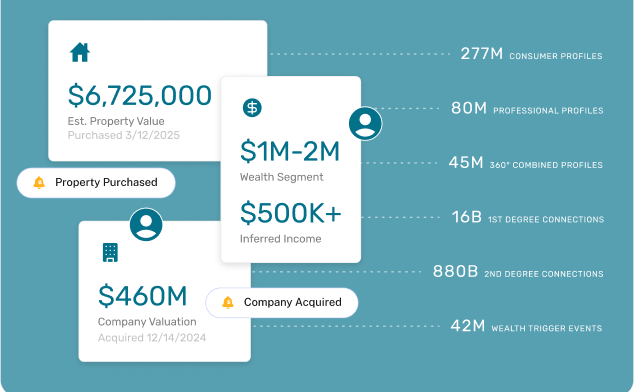
Aidentified monitors 300M+ profiles, tracks 16 wealth event types and maps 16B+ first degree connections, so the introduction path already inside your network surfaces the moment a prospect enters a decision window. Smart wealth alerts run on continuously updated wealth and relationship data, and the platform sits on top of the CRM you already use. The ecosystem map that takes hours by hand becomes a single research session. The same insights carry into client management, service and strategic growth.
Start prospecting high net worth clients with better data
Without this research, the name you call on Monday is whichever one is loudest in the CRM. Every hour spent reconstructing a household by hand is an hour not spent in front of the HNW individuals who are ready to talk. Aidentified shows you who moved, what changed in their financial life, and who in your network can make an introduction. Book your demo to see it run against your own list.
FAQ: Do you have any questions?



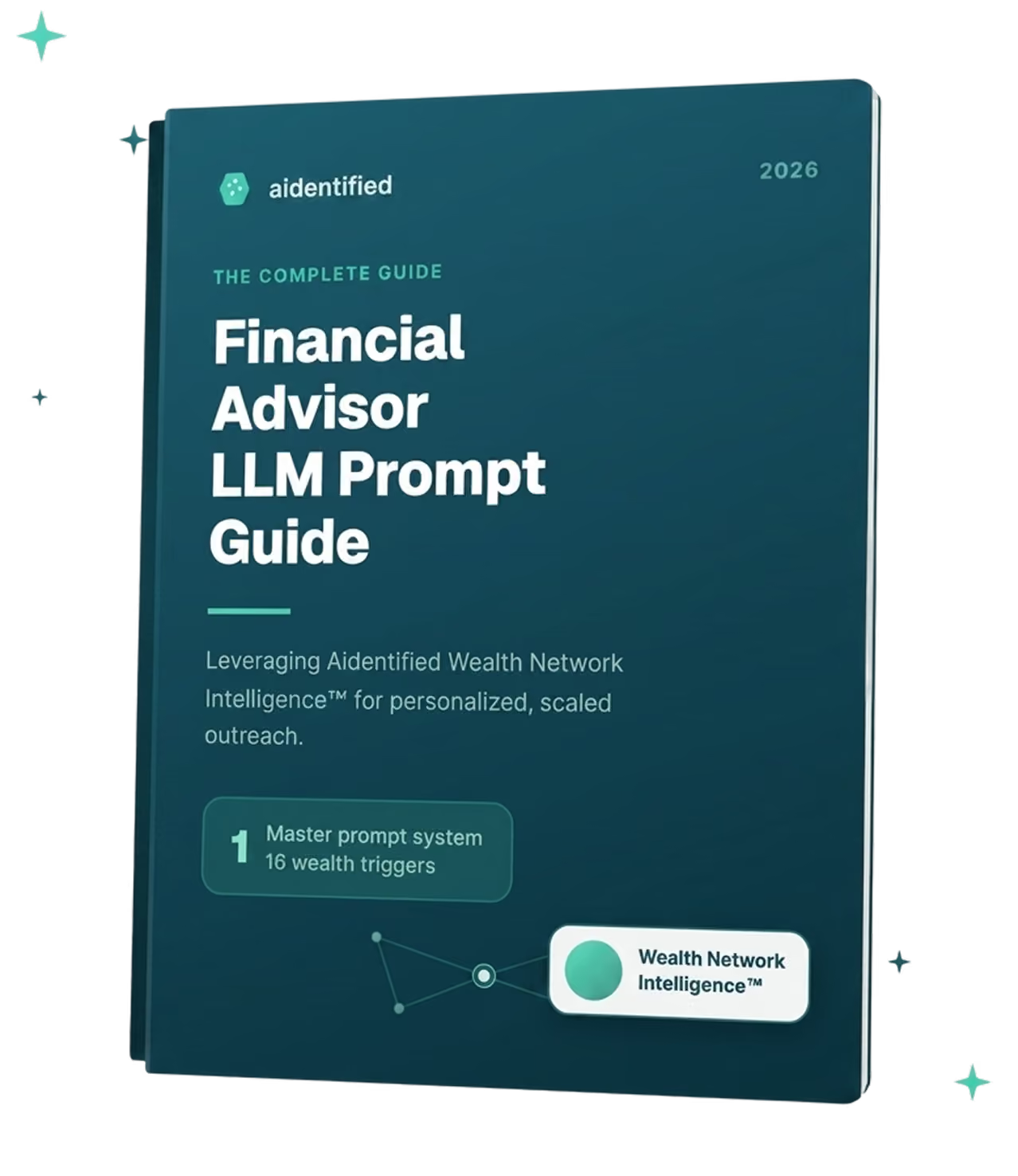
growth engine with the
LLM Prompting Guide.
Reveal the power of your network with Aidentified’s industry-leading AI.
Discover how Aidentified can transform your specialty services business. Contact us today for a personalized consultation and demo.
Explore a demo