6 Client acquisition strategies for financial advisors

This is a div block with a Webflow interaction that will be triggered when the heading is in the view.
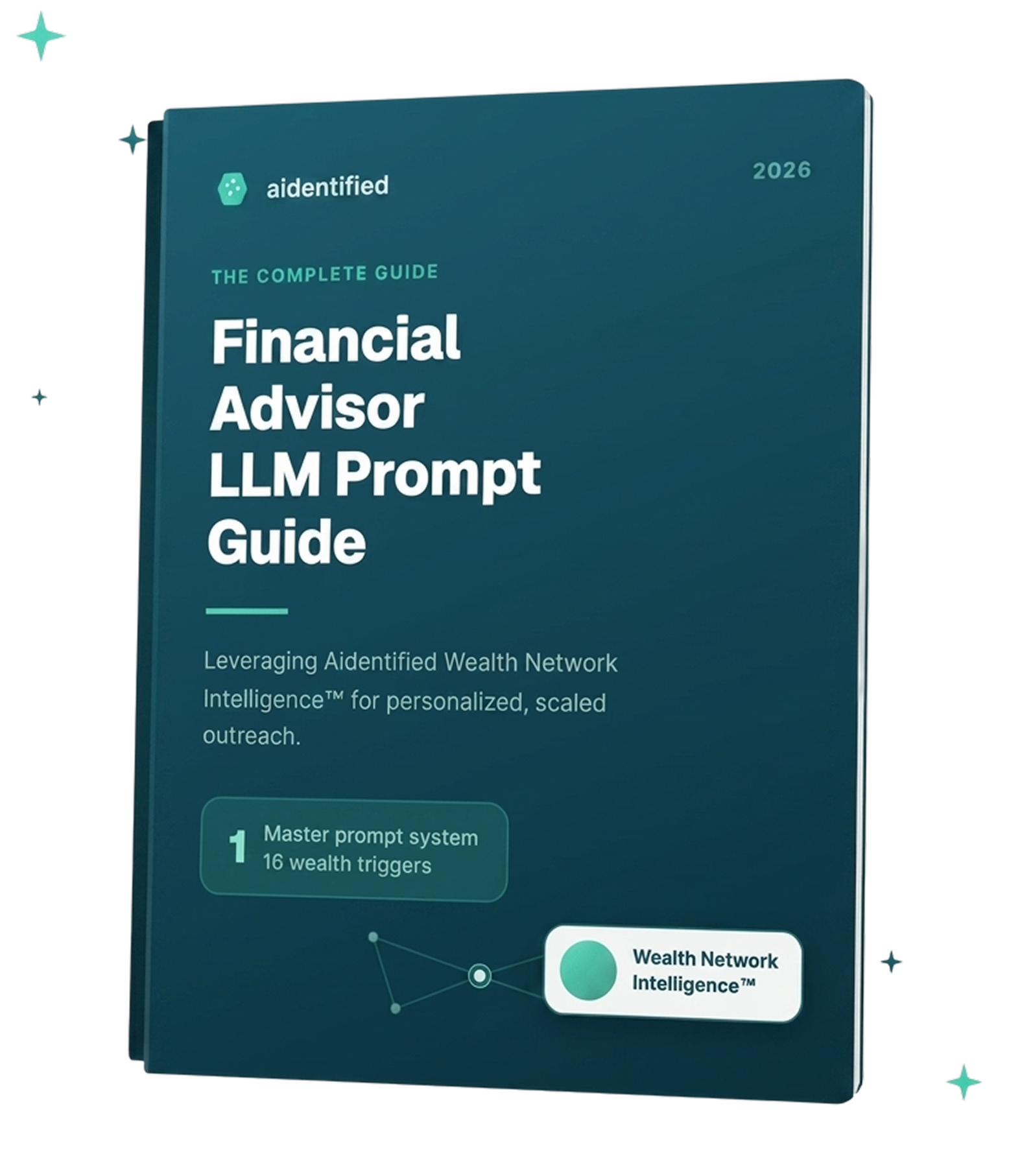
Download the LLM 2026 Prompting Guide
Teach your AI to think like your firm with 10+ customizable prompts
Download TodayTL;DR
Client acquisition for financial advisors relies on warm networks, not cold lists. The challenge is most advisors cannot see what their warm network actually contains.
Specific introduction asks convert far better than general referral requests. The difference is naming a person, a reason, and a clear action.
Timing matters as much as targeting. Wealth events create short windows of genuine receptivity that broad prospecting campaigns never reach.
Most financial advisors spend more time on client acquisition than they should have to. They start cold when the warmest opportunities are already sitting inside the relationships they have built. For more financial advisor prospecting ideas tailored to different wealth segments, advisors can build on the strategies below with a wealth event monitoring platform running them systematically in the background.
These 6 client acquisition strategies for financial advisors are ranked by how much leverage each one produces per unit of effort, starting with the highest-probability channels and building toward the tools that make them systematic. Advisors who want to reach the right prospect at the right moment need both the strategies and a wealth event monitoring platform running them systematically in the background.
Client acquisition strategies for financial advisors in this guide
This article covers 6 client acquisition strategies for financial advisors, ranked from the highest-probability warm channels to the tools that scale them systematically:
- Your existing book already contains a qualified pipeline
- Specific asks convert where general referral requests fail
- COI partnerships put you in the decision window early
- Time your outreach to wealth events, not demographics
- Define a niche and build the credibility to back it
- Relationship intelligence scales what manual prospecting cannot
6 Client acquisition strategies that works
1. Your existing book already contains a qualified pipeline
For each of your top twenty clients, map who they know professionally and personally that fits your target market: former colleagues, business partners, board co-members, close friends approaching a financial transition.
Most advisors discover they already have first-degree paths to dozens of qualified second-degree prospects they have never approached. That is a pipeline, not a cold list.
For a full breakdown, see prospecting strategies for financial advisors.
2. Specific asks convert where general referral requests fail
The ask that converts names a specific person, provides context, and gives the client one low-friction action. Something like: "I noticed your former colleague recently took on a senior role at a company going through a significant transition. If you have stayed close with them, I would welcome an introduction when the timing feels right. I am happy to draft a note you could forward."
Now the client has a single decision to make, not an open-ended research assignment. The more specific the ask, the easier it is to say yes.
Advisors who build strong referral sources for financial advisors use this same specificity at every touchpoint.
3. COI partnerships put you in the decision window early
Attorneys, accountants, and other professional advisors who serve your target market interact with clients precisely when wealth events occur. An M&A attorney meets a business owner at the start of a sale process. A CPA meets a recently retired executive at the moment retirement income decisions are being made.
These professionals are positioned earlier in the decision window than most financial advisors ever naturally get. Building these relationships takes time and consistent value exchange: sharing useful information, making introductions yourself, and demonstrating that you serve the same type of client well.
A COI referral carries stronger implied trust than almost any other introduction path because the referring professional's credibility transfers directly to you.
4. Time your outreach to wealth events, not demographics
The events that matter most consistently include:
- Business sales and liquidity events, where proceeds require immediate placement and tax planning
- Equity vesting and company acquisitions, particularly for executives with concentrated positions
- Senior role changes, especially into titles with complex compensation for the first time
- Significant inheritance, where household wealth changes abruptly and existing advisory relationships may not be adequate
The advisor who arrives through a trusted introduction during one of these windows has a fundamentally different conversation than one who arrives cold three months later, when the decision has already been made.
The same logic applies in high-net-worth prospecting, where timing is often the only variable that separates a conversion from a missed opportunity.
5. Define a niche and build the credibility to back it
Unfocused prospecting is the most common reason advisory practices plateau. When every outreach is calibrated for a different type of prospect, none of it is precise enough to resonate.
Defining a target market, by wealth level, life stage, industry, and geography, gives every prospecting decision a clear filter and a well-defined financial advisor target market. Every strategy on this list becomes more efficient when it is aimed at a defined segment.
Once the niche is defined, your online presence becomes a conversion tool rather than a marketing exercise. A LinkedIn profile and website that address the specific financial decisions your ideal clients face removes friction from every warm introduction, which is the foundation of any plan to grow your client base as a financial advisor.
6. Relationship intelligence scales what manual prospecting cannot
Relationship intelligence platforms map the connections between your clients and a defined target market, score those connections by strength and recency, and monitor for the wealth events that indicate when a prospect has entered a decision window, which solves how to get leads as a financial advisor without hours of manual research.
That is relationship intelligence data working at scale. The result is a prospecting workflow where the right prospect surfaces through the strongest available introduction path at the exact moment a wealth event has made them receptive, one of several financial advisor prospecting ideas that scale far better than manual outreach.
Advisors who want to operationalize this workflow typically combine relationship intelligence with broader sales intelligence tools for financial advisors, and increasingly with ai for financial advisors to prioritize which prospects to act on first.
Build financial advisor growth strategies with Aidentified
Most advisors have the strategies but not the data layer running them continuously. A qualifying wealth event may have occurred in your target market last week with no way to know without prospecting software for advisors tracking it.
Aidentified monitors 300M+ profiles, tracks 16 wealth event types, and maps the introduction path already inside your network at the moment a prospect enters a decision window.
{{banner}}
FAQ: Do you have any questions?



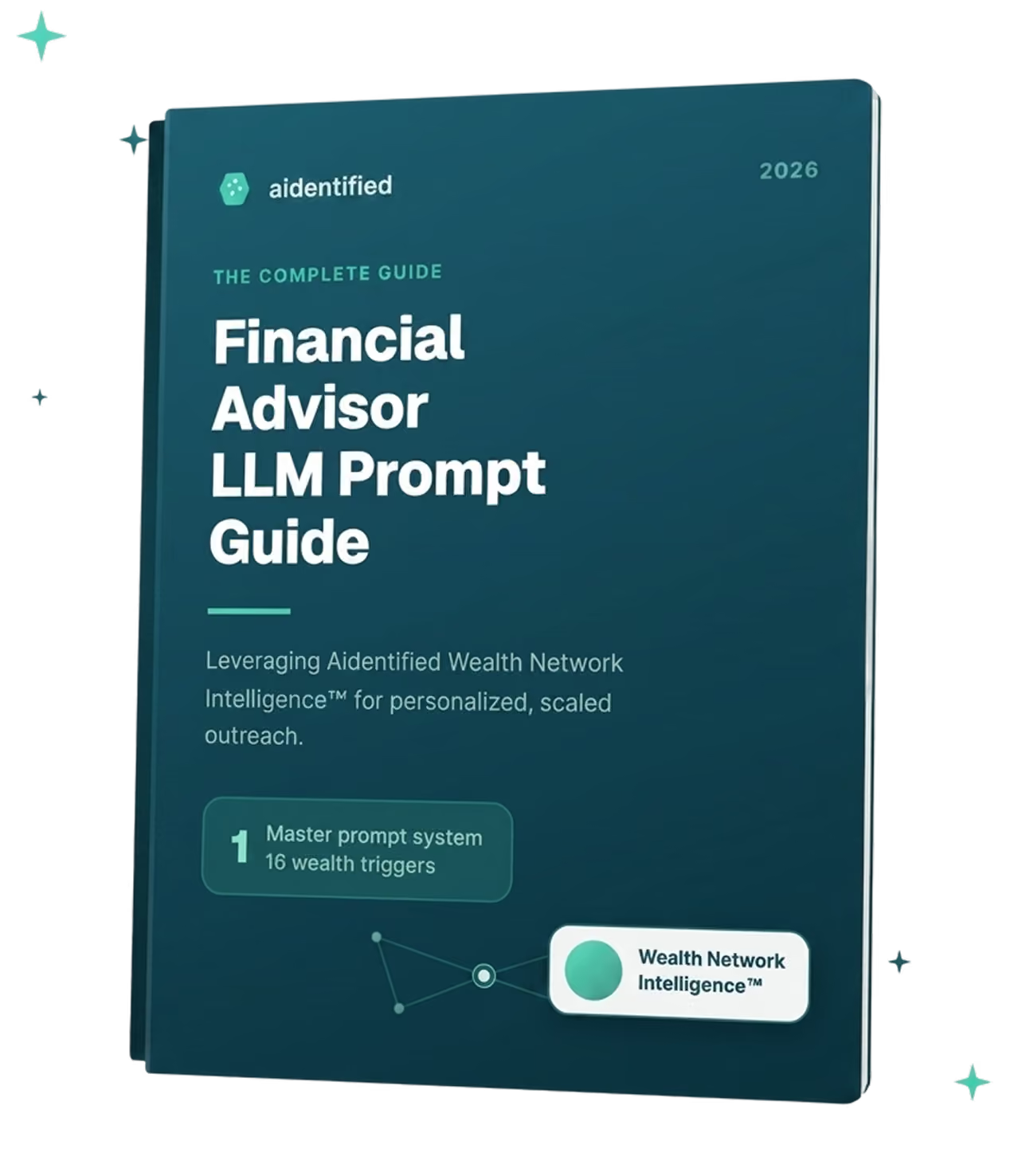
growth engine with the
LLM Prompting Guide.
Reveal the power of your network with Aidentified’s industry-leading AI.
Discover how Aidentified can transform your specialty services business. Contact us today for a personalized consultation and demo.
Explore a demo