

Prospecting software built for high-value client conversations









.png)
.png)





With Aidentified you get
How it works








See why financial advisors choose Aidentified over generic prospecting software.
Most B2B prospecting software is built for enterprise sales teams. Aidentified is built for financial advisors who need wealth context, not just contact data.
Explore a demo


Prospecting Software for Financial Advisors FAQs
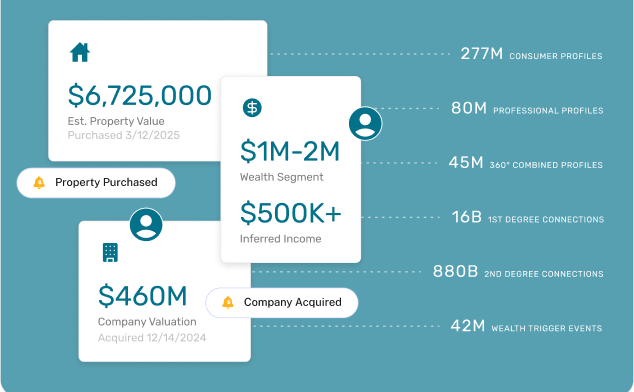
General sales prospecting software is built for enterprise B2B teams and stops at contact data and company intelligence. Aidentified adds estimated wealth ranges, household composition, real estate activity, and financial event tracking across 300M+ profiles, data that general-purpose tools are not designed to surface. If you are comparing options built for advisors specifically, our breakdown of wealth management prospecting tools covers what to look for.
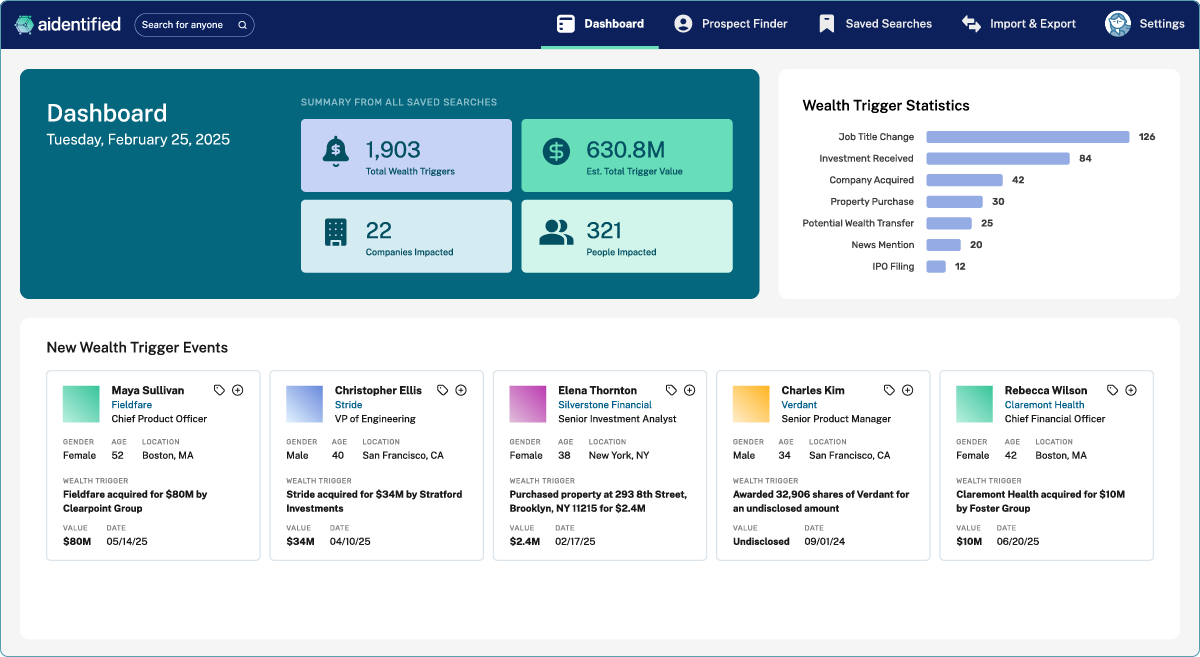
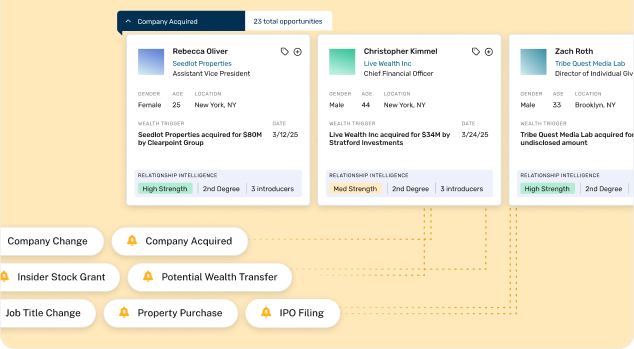
Prospecting software for financial advisors is a platform that helps advisors find, research, and time outreach to high-value prospects using wealth data, household context, and financial event alerts, not just contact information. Aidentified covers 300M+ profiles with estimated wealth ranges, 16 tracked wealth event types, and relationship mapping. For a broader view of how this fits into a repeatable process, see our guide to financial advisor prospecting.
Yes. Aidentified integrates with Salesforce, HubSpot, Redtail, Lofty, Wealthbox and more. You can enrich the contacts already in your CRM with Aidentified's wealth data, household context, and financial event alerts, which means you don't have to choose between your existing workflow and the data Aidentified provides. If a prospect is already in your CRM, Aidentified can surface what's changed in their financial life since you last spoke, which is often the most valuable information when deciding whether to re-engage.
A prospect's financial picture rarely starts and ends with their own income and job title. Household-level data gives you visibility into the people around them: a spouse's employer, a family member's recent liquidity event, or a change in the household's real estate holdings. For a financial advisor, that context often matters as much as the prospect's own profile. It tells you whether you're looking at a household with concentrated wealth, a family navigating a transition, or someone who may be making financial decisions alongside a partner whose situation you also need to understand.
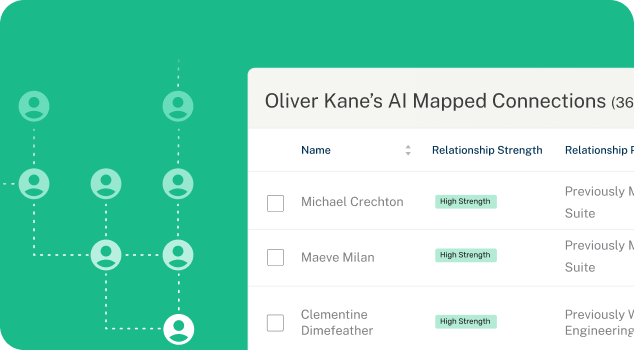
Each profile can include estimated ranges for wealth and income, as well as real estate activity, household composition including family members and their professional backgrounds, career and employment history, liquidity events, and professional network connections. Profiles can contain up to 200 data points, depending on available information.
LinkedIn Sales Navigator gives professional contact data, job titles, company information, and connections within the LinkedIn network. What it doesn't have is the consumer data that makes prospecting in wealth management different from prospecting in general enterprise sales. Aidentified adds estimated wealth ranges, household composition, real estate activity, and family connections that LinkedIn doesn't have the capability to surface. It also tracks financial events like liquidity situations, property transactions, and career changes across more than 300 million profiles, a wider set of people than those who maintain an active LinkedIn presence. The practical difference is that when you find a prospect in Aidentified, you already know enough about their financial life to have a better conversation with them.